
How to fence stolen goods, hide contraband, handle raids and bribe Security in Probably Stolen without ending the run.
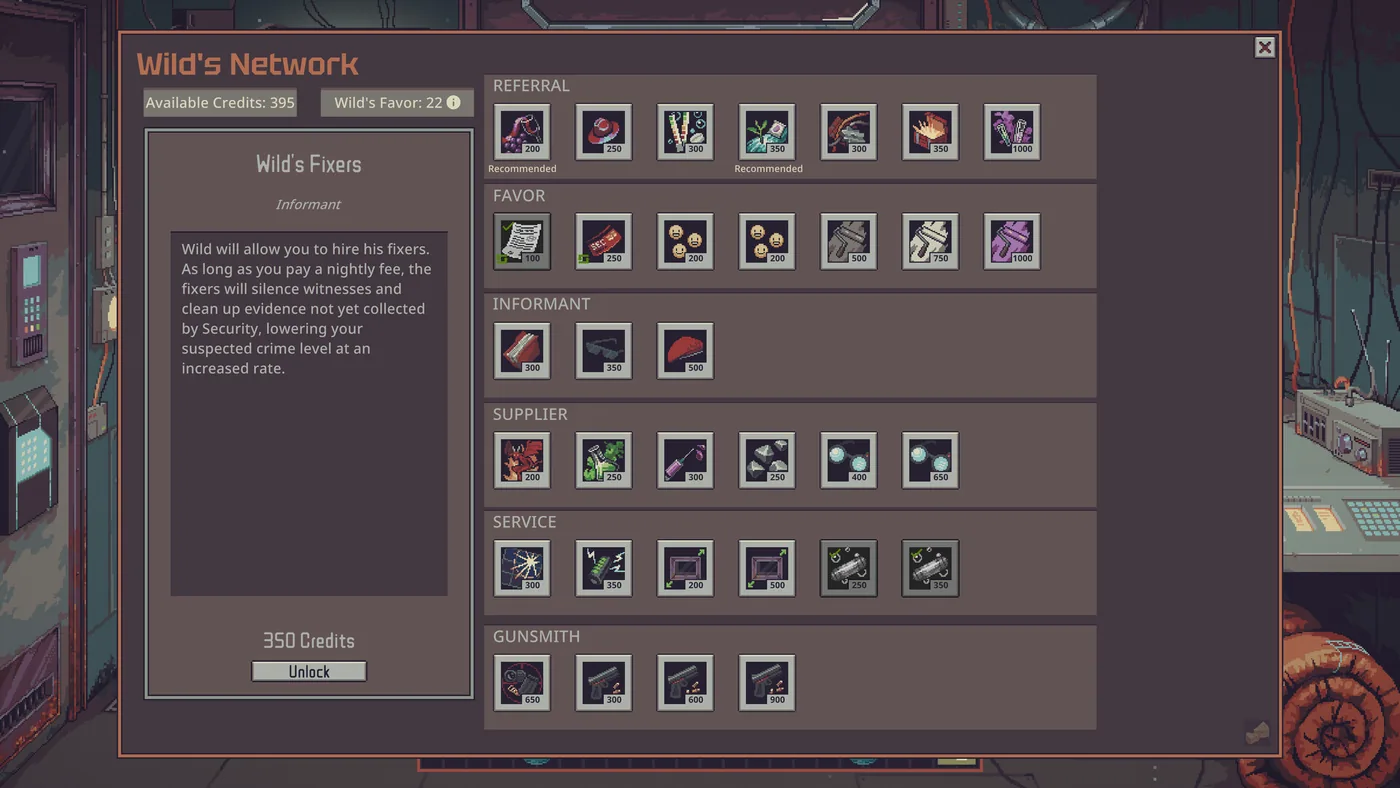
Probably Stolen Contraband Guide: Fence, Hiding and Raids
Fencing is the fastest cash in Probably Stolen and the fastest way to meet a raid. Buy low from sellers who cannot use the legal market, keep the goods out of the display case, sell to customers who do not ask for receipts, and keep a bribe fund. If your case value is already near 1,500 credits, stop.
The Fence start begins with a stack of goods that are not yours and a customer base that does not care. That is the appeal. It is also the lane where a single mistake can turn a good run into a Security ending. This guide is about keeping the margin without becoming the case.
What counts as contraband
The game draws a line between stolen goods and contraband, and the line matters for inspections.
- Stolen goods have a rightful owner. A customer or a scanner can flag them. Selling them is a crime, but possession may be a lesser offence than trafficking.
- Contraband is illegal by category: unlicensed weapons, certain chemicals, prohibited modifications, forged documents. It is a case even if it was never stolen.
- Counterfeit goods are a third category: fake medicine, fake food stamps, mislabeled water. They can be legal to possess and illegal to sell as genuine.
A single item can be two of these. A stolen gun with an illegal mod is stolen goods and contraband. The case value adds up.
The fence loop
- Buy from the desperate. Scavengers, addicts and customers in a hurry sell below market. The discount is your margin.
- Assess the risk before the price. A stolen item with a visible serial is worth less than the same item without one, because the risk is higher.
- Clean the item if you can. A new label, a removed serial or a repaired part can change the risk. Some of these actions are themselves crimes; check the item's state.
- Hide it. Do not put contraband in the display case. Use a smuggler bay, a container or a back-room spot that the inspection does not open.
- Sell to the right customer. A scavenger buys cheap goods; a criminal buys untraceable goods; a collector buys rare goods. Do not sell a stolen heirloom to a Security officer.
- Record the case value. If the total exposure is near 1,500 credits, stop buying and start selling down.
The crime system guide explains how case value becomes an investigation, a raid and a sentence. The short version: the game counts the goods, not the individual sale.
Hiding spots and raids
Hiding is not a single object. It is a layered defence:
- Display case: legal goods only. Anything else is an invitation.
- Back room: better, but not safe from a determined inspection.
- Smuggler bay / hidden container: the real hiding spot. The [base game] has at least one contraband-specific storage option; the Workshop has more.
- On your person: small items only. A raid that searches you is a different problem.
A raid is not a random event with no counterplay. It is usually the result of a case value, a faction decision or a report. Keeping the case value low, the hiding spot current and the Security reputation not hostile reduces the chance. When a raid happens, the goods in the display are the first to go; the goods in the hiding spot may survive.
A single hiding spot is a single point of failure. If the raid finds it, you lose the entire stock and the case value is calculated from the whole pile. Split the risk across two spots, and keep the most incriminating item in the better one.
Bribes and reputation
Security reputation is not a simple "good" stat. A high Security reputation opens the permit route and makes inspections less arbitrary, but it also makes you useful to them. A low reputation makes every interaction a threat.
Bribes are a cash-for-risk trade. A small bribe can clear a minor case; a large bribe can clear a major one, but it also tells the officer you have money. The correct bribe is the smallest one that resolves the current problem, paid before the case value grows.
Do not bribe the same officer twice in a row if you can avoid it. The game tracks relationships, not just transactions.
The margin math
Fencing has a simple margin:
Profit = resale price − purchase price − cleaning cost − bribe/risk cost.
The risk cost is the hard part. If a stolen item has a 20% chance of being seized, subtract 20% of its resale value from the expected profit. If the item can trigger a case that costs 500 credits, subtract the expected case cost. A 100-credit margin on a 1,000-credit item is not worth a 20% seizure chance.
The best fence items are:
- High value per unit (easy to hide).
- No serial or a removed serial.
- A buyer type that does not inspect.
- A category that is not currently under investigation.
The worst are bulky, traceable and loud: a crate of stolen medicine with the clinic's label still on it is a case with a handle.
Fencing and the other lanes
- Guns share the black market but not the paperwork. A gun shop can sell a legal gun; a fence can sell the same gun without a licence, at a higher risk.
- Chemistry produces contraband, not stolen goods. The two lanes can share a hiding spot, but the case values add up.
- Appraisal is the fence's best friend: a mispriced stolen item is a double loss.
- Security reputation is the fence's enemy and the gun shop's friend. Pick one identity.
The Fence start
The Fence start gives you the opening stock and the customer pool. The first week should be:
- Sell the low-risk goods first.
- Identify the repeat buyers who do not inspect.
- Buy one hiding spot before you buy more stock.
- Keep the case value below the first investigation threshold.
- Do not buy a gun licence on day 2; the two identities conflict.
The first 7 days guide covers the opening order for the other starts. The fence-specific change is that the hiding spot comes before the second supplier.
When to stop fencing
Stop when:
- The case value is near 1,500 credits.
- Security has searched the store once and found something.
- A faction is at -80 or lower and still moving down.
- The margin per item is below the risk cost.
- You have enough cash to buy the deed and do not need the risk.
The rent and buyout guide covers the exit. Fencing is a tool to get to the buyout, not a lifestyle.
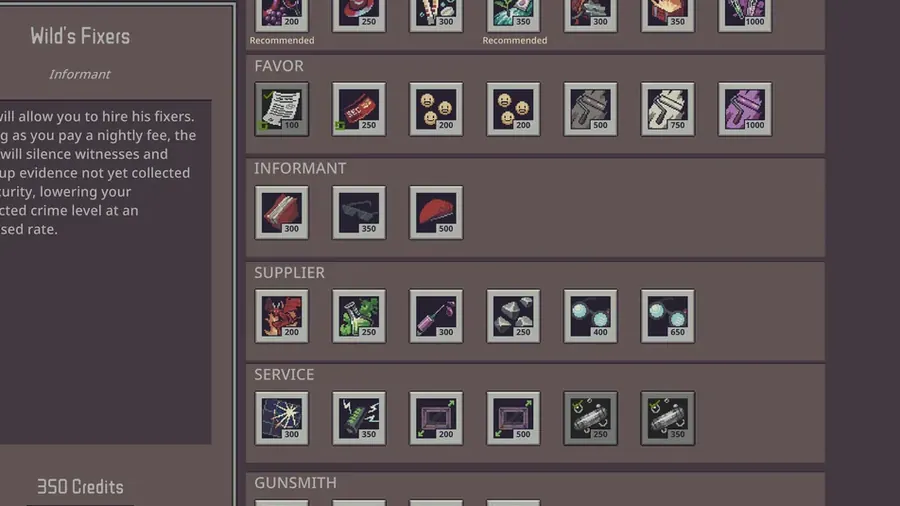
A black-market supplier grid: every line is inventory that Security may ask about.
FAQ
How do I hide contraband?
Use a Smuggler's Bay or a module with hidden storage. Raids check accessible containers.
Do raids check modules?
Yes. Hidden compartments reduce detection but are not immunity.
Should I bribe the inspector?
Bribe when the case value is below the fine plus reputation loss. Above that, eat the fine or fight the case.
Sources and version notes
- Steam store page and in-game inspection/case UI, checked 2 November 2026.
- Ending thresholds cross-checked against the community ending list; see all endings.
- Build 1.0.0.6.
Official source: Steam store ↗ · Steam guides ↗ · Steam Workshop ↗, checked 2 November 2026.
More Probably Stolen Guides
Hydroponic farming, Nutrifruit, fish and organ dealing in Probably Stolen: setup costs, harvest math, and the risks of the biological trade.
How to make a Probably Stolen mod: the official C# API, manifest.xml, build setup, hook points, dev console and Workshop publishing.
How the Rat Wrangler start works: cage setup, feeding, breeding, genes, disease control and the math that decides whether rats are profitable.
Water grades, testing, filters and profit math for the Probably Stolen water merchant route, including what changed in 1.0 and what still needs testing.
How winemaking works in Probably Stolen: fruit, fermentation, aging, bottle value, and the profit math behind a wine shelf.
All 17 Probably Stolen endings, the exact triggers for each, how to reach the two buyout wins and how to avoid the reputation-floor losses.
The best Probably Stolen mods by play style, with Workshop IDs, subscription counts and compatibility notes for the 1.0.0.6 modding update.
How Brewing Expansion works: the 16 seeds, 67 wine recipes, growing and aging loop, automation, profit assumptions and compatibility with vanilla winemaking.