
How winemaking works in Probably Stolen: fruit, fermentation, aging, bottle value, and the profit math behind a wine shelf.
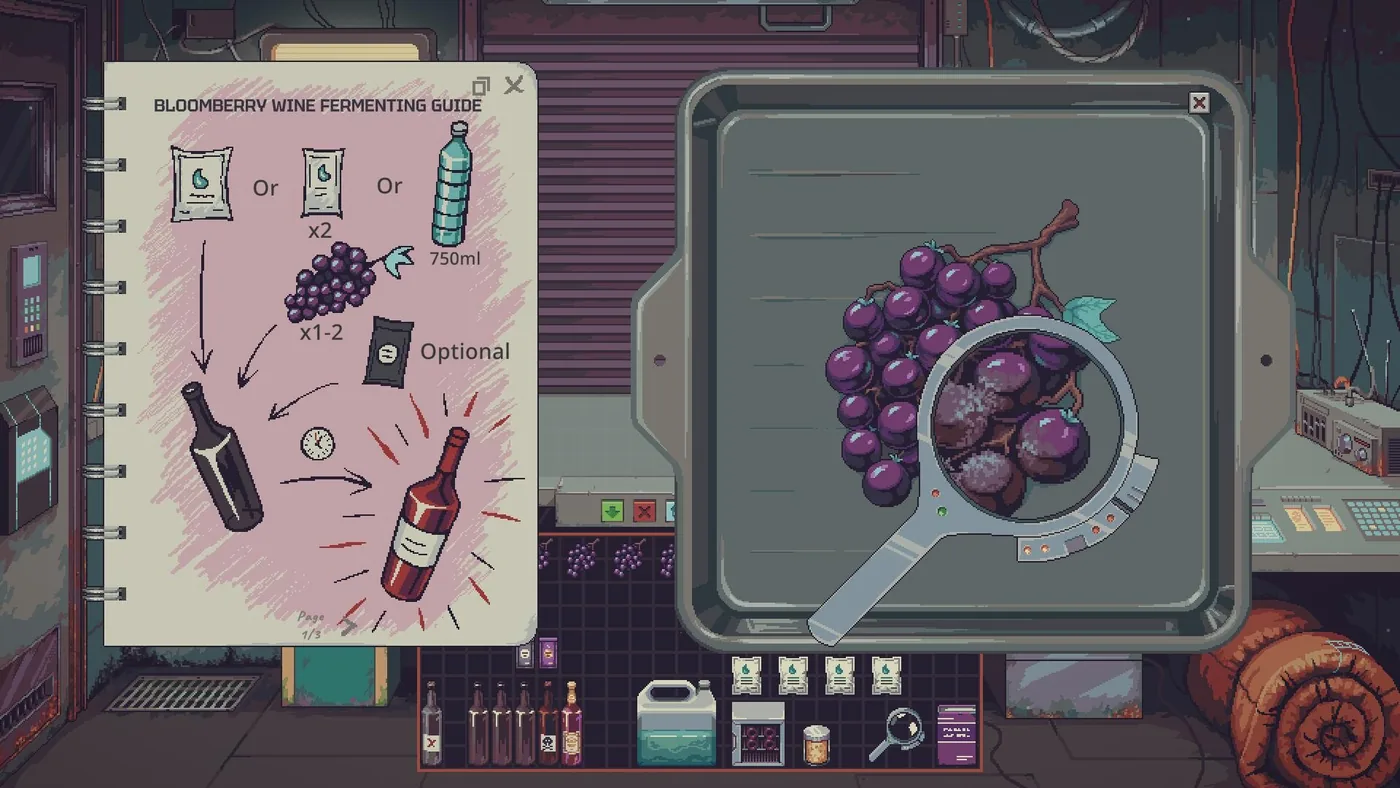
Probably Stolen Wine Guide: Winemaking Profit
Wine is a patience product. Buy fruit or grow it, ferment it, age it, and sell the bottle to a customer who values grade. The margin per bottle is better than water, but the capital is tied up for days. Do not start a batch with rent money.
Wine in Probably Stolen is one of the few products that rewards waiting. A bottle on the shelf is not just stock; it is a claim about origin, grade and age. The customer may appraise it, test it, or simply take your word for it. That is why wine pairs with appraisal and why a badly labeled bottle can cost more than it earns.
The production chain
The exact machine names and recipe quantities are in the in-game manual; the community guide "Winemaking and You" covers the process in detail. The shape is consistent:
- Fruit. Grapes are the reference input; the game also supports other fruit. Grow it hydroponically or buy it from a supplier.
- Must. Process the fruit into a fermentable base. Quality in, quality out: a bruised or contaminated input produces a flawed batch.
- Fermentation. Add yeast or the recipe's culture and let the batch run. Temperature and contamination matter; a stalled ferment is a loss, not a delay.
- Aging. Time in the vessel changes the grade. This is the step that ties up capital.
- Bottling and labeling. The bottle carries the grade claim. A false label is a crime, not a marketing choice.
The screenshot "SILENSWINE" shows the appraisal view of a bottle and a grape. That is the key interaction: the customer can see more than the label. If the bottle's real value and the label disagree, the sale is a risk.
What the bottle is worth
Wine value is built from four inputs:
- Base value of the fruit. Better fruit, higher ceiling.
- Fermentation quality. A clean ferment preserves the fruit; a flawed one caps the grade.
- Age. Older is not automatically better; it is better up to the recipe's peak, then it declines or stops improving.
- Label and provenance. A credible label sells to a higher-tier customer; a fake label sells once and then becomes evidence.
The profit formula is the same as any other product:
Bottle profit = sale price − fruit cost − yeast/input cost − machine time − bottle/label cost − risk.
The difference is time. If a batch takes five days to age, the capital is unavailable for five days. Compare the bottle margin with what the same capital would earn in water or appraisal over the same period. A 200-credit bottle profit after five days is 40 credits per day, not 200.
Fruit: grow or buy
Growing fruit is cheaper per unit but slower. Buying fruit is faster but cuts the margin. The choice depends on your water and space.
- Hydroponic fruit uses the farm route: seeds, water, light and time. It pairs well with wine because the fruit quality is under your control.
- Bought fruit is a cash-flow decision. If the supplier's price leaves a positive bottle margin after aging, it is a valid batch. If not, wait for a better supplier or a price event.
- Foraged fruit is the cheapest input and the least consistent. Test it before committing a full batch.
The Brewing Expansion mod adds 16 seeds, 18 fruits and special ingredients, and 67 wine recipes. If you are on vanilla, ignore those numbers; the Brewing Expansion guide covers the mod separately.
Customer matching
Wine buyers are not a single group.
| Buyer | What they want | Risk |
|---|---|---|
| Upper Levels | Provenance, age, a good label | High expectation, reputation damage if fake |
| Lower Levels | Drinkable volume, fair price | They may test or compare |
| Scavengers | Cheap alcohol | Low margin, low risk |
| Collectors | Rare bottles, specific vintages | Appraisal risk, high value |
| Security | Not a normal buyer | An inspection with a wine list |
The highest margin is not always the highest-tier buyer. A collector who appraises the bottle correctly pays a fair price; a lower-level buyer who trusts the label may pay more relative to the bottle's real value. The difference is risk.
A wine batch checklist
Before you start:
- Is the rent covered without this batch?
- Do you have enough fruit for a full batch, not a half batch?
- Is the fermenter clean?
- Do you have bottles and labels ready?
- Do you have a buyer type in mind?
After fermentation:
- Taste or test the batch. Record the grade.
- Decide whether to age or sell young.
- Label honestly. If the batch is below the target grade, sell it as a lower grade or blend it according to the manual.
- Keep one bottle as a reference sample.
After aging:
- Re-check the grade. Aging can change it.
- Price from the current grade, not the grade you hoped for.
- Sell the oldest bottles first.
Common wine mistakes
- Starting a batch with rent money. Wine is the least liquid lane in the game.
- Over-labeling. A bottle labeled above its grade is a case waiting to happen.
- Aging everything. Some batches peak early; some never improve. The manual and the taste/test result tell you which.
- Ignoring the bottle. A premium wine in a cheap bottle still reads as premium if the label is right, but the customer may appraise the container too. Presentation matters.
- Competing with the Brewing Expansion on vanilla. The mod adds recipes and ingredients that do not exist in the base game. Do not price a vanilla batch against a modded one.
Wine versus the other lanes
- Water is faster and safer; use it for cash flow.
- Chemistry has a higher ceiling but a higher loss rate.
- Appraisal is the natural companion: every bottle is an appraisal opportunity.
- Hydroponics supplies the fruit and shares the water infrastructure.
Wine is a good second lane for a patient player. It is a bad first lane for someone who has not covered rent.
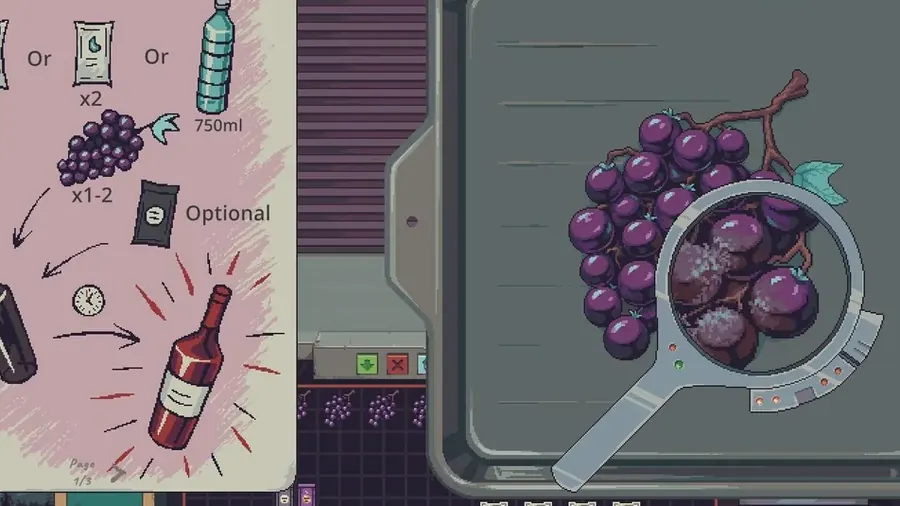
A bottle and fruit on the appraisal table; vintage and authenticity both affect the offer.
FAQ
Is winemaking worth it?
It is a slower, higher-margin route. It works best once you have spare labour, storage and a reliable fruit supply.
How long does aging take?
Aging time depends on the recipe and vessel. The page marks which thresholds still need in-game confirmation on 1.0.0.6.
Which grapes should I start with?
Start with the cheapest seed that matches a known recipe, then reinvest in higher-grade fruit.
Sources and version notes
- Steam store page and in-game winemaking manual, checked 2 November 2026.
- Community reference: "Winemaking and You" on Steam Community, used for topic verification only; recipes are not reproduced.
- Brewing Expansion Workshop item 3829730904, snapshot 2 November 2026.
- Build 1.0.0.6.
Official source: Steam store ↗ · Steam guides ↗ · Steam Workshop ↗, checked 2 November 2026.
More Probably Stolen Guides
Licences, permits, weapon mods, inspections and margins for the Probably Stolen gunsmith route, with a practical risk plan.
Hydroponic farming, Nutrifruit, fish and organ dealing in Probably Stolen: setup costs, harvest math, and the risks of the biological trade.
How to make a Probably Stolen mod: the official C# API, manifest.xml, build setup, hook points, dev console and Workshop publishing.
How the Rat Wrangler start works: cage setup, feeding, breeding, genes, disease control and the math that decides whether rats are profitable.
Water grades, testing, filters and profit math for the Probably Stolen water merchant route, including what changed in 1.0 and what still needs testing.
All 17 Probably Stolen endings, the exact triggers for each, how to reach the two buyout wins and how to avoid the reputation-floor losses.
The best Probably Stolen mods by play style, with Workshop IDs, subscription counts and compatibility notes for the 1.0.0.6 modding update.
How Brewing Expansion works: the 16 seeds, 67 wine recipes, growing and aging loop, automation, profit assumptions and compatibility with vanilla winemaking.