
Which starting scenario is easiest, what to buy in the first week, and the opening order that keeps rent covered in Probably Stolen.
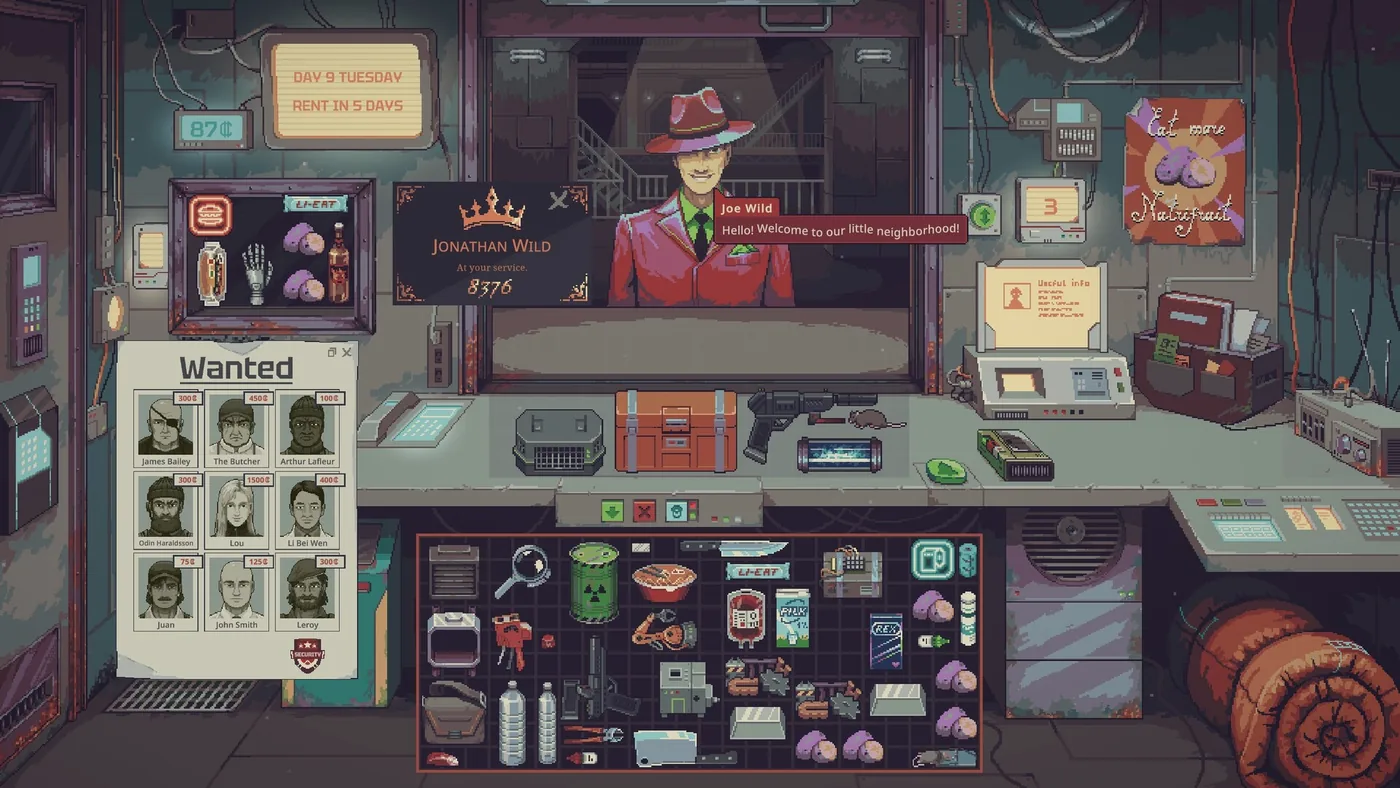
Probably Stolen Best Start and First 7 Days
For a first run, pick Apprentice. It gives you a mixed stock to appraise, no single fragile supply chain, and the developer's own recommended onboarding. For a second run, Water Merchant is the simplest profit loop and Fence is the fastest cash. Pick Rock Bottom only when you want the challenge, not because you heard it is "the real game".
The start you choose changes your opening stock, your first customers and your available machines. It does not change the rent clock, the faction thresholds or the ending conditions. That means the first seven days follow the same shape regardless of scenario: learn what your stock is worth, find one repeat buyer, and protect the rent.
The nine starts, ranked for a new player
| Rank | Start | Opening strength | Opening problem |
|---|---|---|---|
| 1 | Apprentice | Mixed goods, broad customer pool, tutorial-friendly | No single high-margin lane |
| 2 | Water Merchant | Cheap machine entry, universal demand, easy testing | Low ticket size, needs volume |
| 3 | Fence | High margin, fast cash, black-market access | Raids, case value, Security attention |
| 4 | Hydroponic Farmer | Repeatable production, good scaling | Slow first harvest, seed and water costs |
| 5 | Aquafarmer | Fish demand, passive-ish production | Narrow customer pool |
| 6 | Gunsmith | High ticket, licence access, mods | Parts cost, inspections, permit gate |
| 7 | Chemist | Highest margin ceiling, cartel storyline | Recipe complexity, purity risk, inspections |
| 8 | Rat Wrangler | Cheap feed, meat and gene sales, hidden achievement | Slow, fiddly, disease and overcrowding |
| 9 | Rock Bottom | The pure challenge | No stock, no margin for error |
The best specialization page goes deeper on which start pairs with which playstyle. This page is about the first seven days after you pick.
The opening order (and why)
Spend in this order. Stop when the next rent is no longer covered.
- Labeler. A mislabeled item is a crime waiting for an inspector. The labeler is the cheapest way to stop making evidence by accident.
- Testing kit. Water and consumables are the two categories where the customer can test your claim in front of you. Ten strips are enough to learn the grades.
- One display case. Attractiveness affects traffic. A case with three good items beats a shelf with thirty random ones.
- Stock for one lane. Buy what your existing customers ask for. Do not buy a "good deal" in a category nobody has requested.
- One machine, only if it removes a bottleneck. The Water Filter is 25 credits after 1.0.0.2; the Moisture Farm is 350. A machine that sits idle is a rent delay.
- Rent reserve. This is not optional. Keep the next payment plus a small buffer in cash, not in inventory.
Stock you can sell this week, supplies you can process this week, savings for the next rent. If a purchase does not fit one of those three, it is an expansion, and expansion waits until day 8 at the earliest.
Day 1: appraise before you buy
The tutorial gives you an item and a customer. Appraise the item yourself, then compare the board's value with the customer's offer. The gap is your margin, and the gap is also a lesson in how much the game expects you to haggle.
Do not spend the first day buying inventory from every supplier. Walk the store, read the ledger, and note which customers appear. The first repeat customer is worth more than a one-off bargain.
Day 2–3: find the repeat buyer
A repeat buyer is a customer type, not a named NPC. Water buyers, scavengers, upper-level collectors and Security all behave differently.
- Scavengers buy damaged and low-grade goods and rarely test. Good for clearing dead stock.
- Lower-level residents test water and consumables. If your label is wrong, they notice.
- Upper-level buyers skip some tests but pay more; they also expect better presentation and labels.
- Security is not a normal buyer. They are an inspection with a wallet.
Once you know which type is showing up, buy stock for that type. A shelf of mixed goods is harder to price than a shelf of one category.
Day 4–5: the first machine decision
The machine decision is a payback calculation, not a shopping decision.
Payback days = machine price ÷ extra profit per day.
If a 350-credit Moisture Farm adds 50 credits of profit per day, payback is seven days. If your next rent is in four days, it is a bad buy even though the payback looks fine. If it adds 15 credits per day, payback is 23 days and it is probably not worth it before the first expansion.
For water, the cheap entry is the filter at 25 credits, not the purifier at 250. Start with the filter and a testing kit; upgrade when you have customers who pay for purity. For farming, the Moisture Farm is the entry machine, but seeds and water are recurring costs; do not buy it on day 4 with no seed budget.
Day 6–7: the rent test
On the night of day 6, open the ledger and answer three questions:
- Is the next rent already covered in cash?
- Is there enough stock to trade for the next three days without buying?
- Is there any item in the store that can trigger a case if inspected?
If the answer to the first is no, do not buy anything on day 7. Sell dead stock, take appraisal jobs, and cut the second lane. If the answer to the third is yes, fix the label, move the item to a hiding spot, or get rid of it before Security visits. The crime system guide explains why a small case can become a large one.
If all three answers are good, you are ready for the midgame. Read the money guide for the cash-flow model and the rent and buyout guide for the closing conditions.
Start-specific opening notes
Apprentice
Use the mixed stock to learn appraisal. Sell the low-value items first, keep one interesting item for the display case, and do not try to become a specialist on day 1. Your advantage is information: you see more item categories early.
Water Merchant
Buy the filter, not the purifier. Test every batch, label honestly, and build a reputation with lower-level buyers before chasing upper-level premium. The water route has the grade table and the margin math.
Fence
Your margin is real but your risk is criminal. Keep contraband out of the display case, use a hiding spot, and never sell a stolen item to a customer who is obviously Security. The fence route covers raids and bribes.
Chemist
Do not sell your first batch to the first buyer. Test purity, record the result, and keep a clean sample for the cartel handover. The chemistry route explains the purity trap.
Rock Bottom
You have no stock and no room for a bad purchase. Read the Rock Bottom guide before you spend anything. The normal opening order still applies, but the margin for error is gone.
Common first-week mistakes
- Buying a second lane before the first pays. You end up with two half-stocked shelves and one rent bill.
- Spending the rent reserve on a "limited" supplier offer. Supplier offers repeat; rent does not wait.
- Ignoring the appraisal board. It is the cheapest source of customers and the best way to learn prices.
- Reporting every criminal. Security reputation is useful, but a station full of informants stops bringing you deals.
- Shooting every Aug on sight. It solves the customer and raises a different problem. Read the Aug guide before you make it a habit.
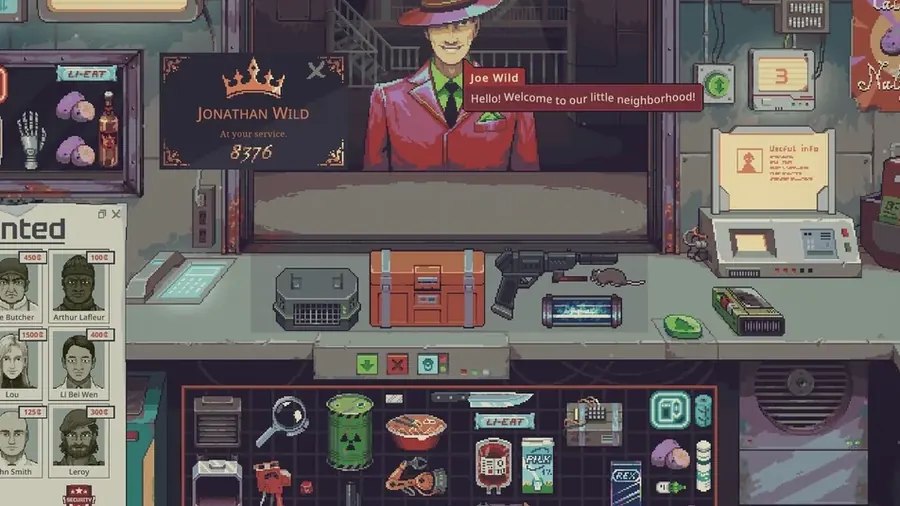
Opening stock and display space: what you buy on day one decides what you can sell on day seven.
FAQ
What is the best first purchase?
A Water Filter and testing kit if you sell water; otherwise appraisal slips and a cheap stock lot that matches your start.
Should I buy machines on day 1?
No. Keep the first 200–300 credits liquid for rent and a second stock batch.
How much rent reserve should I hold?
At least one full rent payment plus 50 credits. On Thin Margins, hold two payments.
Sources
- Steam store page, launch build and 1.0.0.6 hotfix notes.
- In-game start selection and Starting Perks screen, checked 2 November 2026.
- Machine prices after 1.0.0.2 and 1.0.0.5 as noted.
Official source: Steam store ↗ · Steam guides ↗ · Steam Workshop ↗, checked 2 November 2026.
More Probably Stolen Guides
All 17 Probably Stolen endings, the exact triggers for each, how to reach the two buyout wins and how to avoid the reputation-floor losses.
How to price items, read authenticity, use appraisal slips and avoid the expensive mistakes that turn a perfect appraisal into a criminal case.
How to spot augmented customers, use the Aug Scanner, handle the rogue AI meter and avoid the Augmented ending in Probably Stolen.
How Brewing Expansion works: the 16 seeds, 67 wine recipes, growing and aging loop, automation, profit assumptions and compatibility with vanilla winemaking.
A profit-first Probably Stolen chemistry guide: purity math, acid and base workflow, contaminant control, and which chemicals are worth the risk.
Case value, investigation, raids, fines and bribes in Probably Stolen: how the crime system builds a case and how to stop it before 1,500 credits.
The five Probably Stolen factions, what reputation unlocks, which choices raise or lower it, and the -100 thresholds that end runs.
How to fence stolen goods, hide contraband, handle raids and bribe Security in Probably Stolen without ending the run.